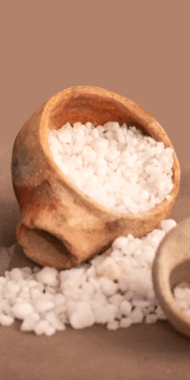
salt vessel

Salt is gold

The history of the oldest salt extraction and urban center in Europe (5600 - 4350 BC) - Provadia-Solnitsa

Around 5600 BC, Neolithic farmers from present-day Thrace left their homes, crossed the Balkan Mountains, and settled near the salt springs by what is now the city of Provadia. They did this due to the overwhelming need to obtain the vital substance we now call table salt, which served as a form of currency for several millennia. Thus, the new settlers established the oldest salt extraction center in Europe, utilizing a technology that is still in use today - evaporating saline spring water in ceramic vessels. The production was traded to the south, all the way to the Aegean Sea. The process began with the use of specially constructed domed furnaces located within the homes. Due to the high demand for salt, two to three centuries later, the technology was improved, and production was moved outside the settlement to a dedicated production center

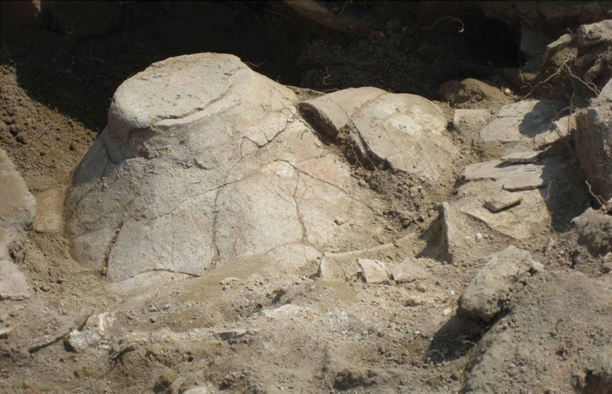
Aerial view of the salt production complex
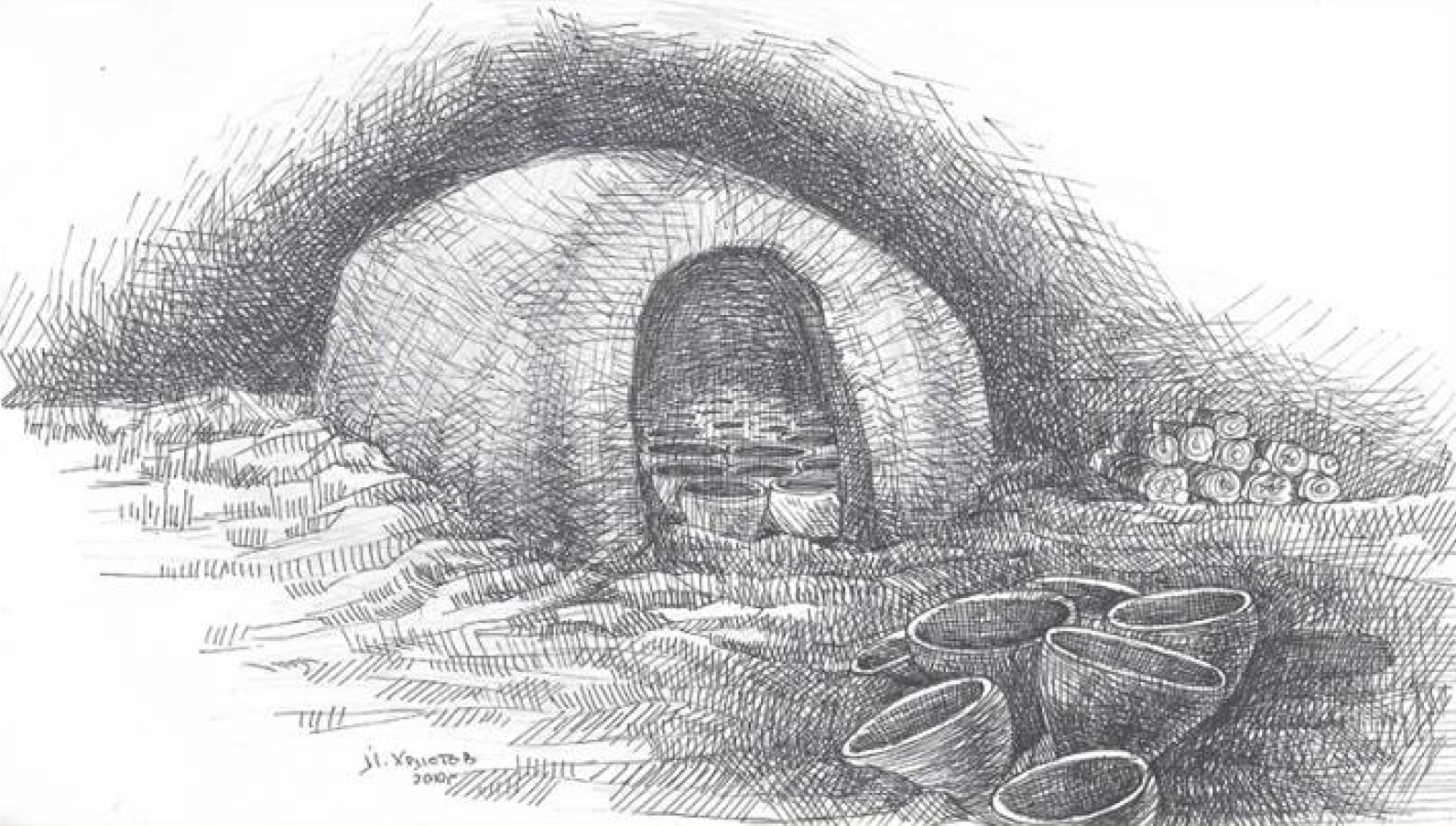
Reconstruction of the production oven, Late Neolithic 1, 5600 - 5200 BC
Reconstruction of the salt-production process, Late Neolithic 2, 5200 – 4900 BC
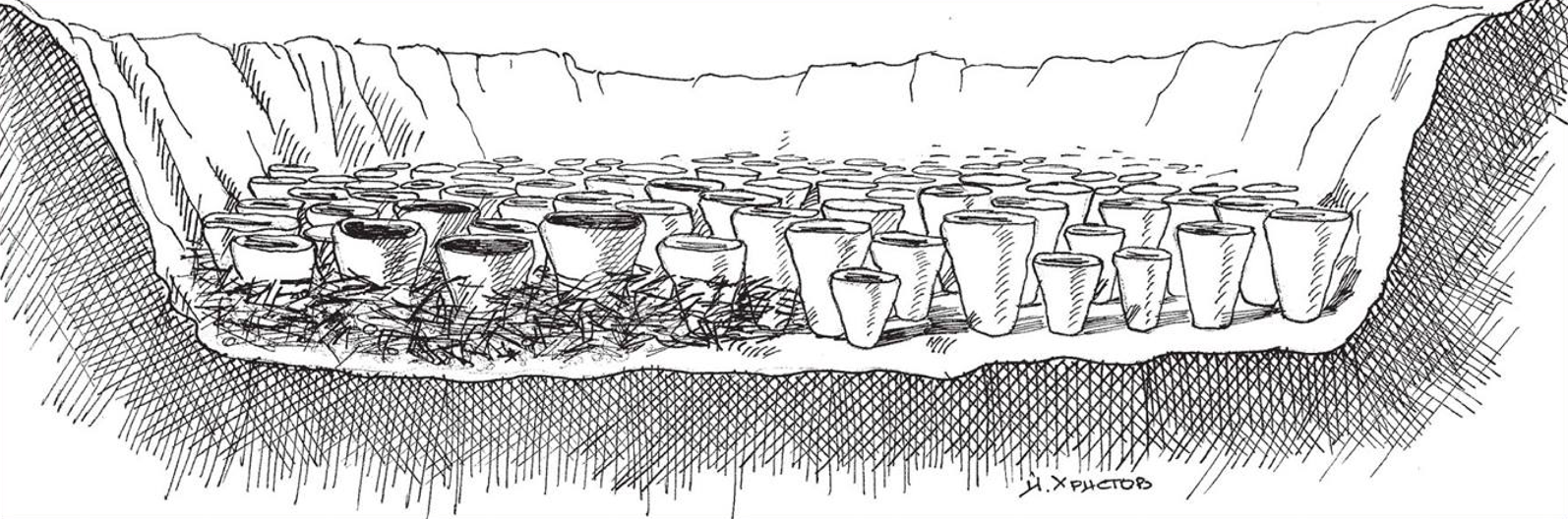
Reconstruction of the salt-production process in a pit, Middle/Late Chalcolithic 1, 4600 - 4450 BC
Brine evaporation installation near the settlement mound, top view. Second half of the Late Chalcolithic, 4450 – 4350 BC

Production of cooking salt during the Neolithic and Chalcolithic

The specialized production of cooking salt began at the start of the Late Neolithic period (around 5600 BC). The technology, used for the first time in Europe, was based on evaporating salty spring water (brine) in ceramic vessels to obtain dry salt. The process took place in specially crafted, deep, thin-walled ceramic bowls, arranged with a wooden "paddle" in a highly heated clay domed kiln. The accumulated heat from the structure was generated by burning the necessary amount of wood inside. The kiln had two openings in its thick clay dome: a larger one at the front for inserting the brine-filled vessels and later removing them with dry salt, and a smaller side opening for controlling the process through air flow. A single firing in such a kiln could produce about 25 - 26 kg of dry salt. The "salt workshop" was located on the first floor of a two-story house, with the second floor serving as a living space.

The strong demand for cooking salt led to the creation of new production facilities with greater capacity and the relocation of production outside the settlement, closer to a stronger salt spring, around 5200 BC. These new facilities were specifically designed and built for salt production. They were dug into the ground and had an oval shape, measuring up to 4.40 x 2.50 meters. Earthen walls about 30 - 40 cm high divided the interior lengthwise into three or four "channels." Brine was evaporated in deep ceramic bowls with two almost horizontal protrusions on the rim. These bowls were placed in the channels so the protrusions rested on two adjacent walls. The empty space beneath the bowls was filled with wood, which, when burned, evaporated the brine. Additional wood could be added to the fire, and brine could be refilled into the vessels. A single cycle in such a facility could yield 120 - 150 kg of salt, significantly boosting trade.

At the beginning of the Early Chalcolithic, around 4900 BC, modifications were made to the production facilities and ceramic vessels. The new structures were pits dug into the ground, measuring approximately 7 x 5 meters and 1 meter deep. Within them were two hearth-like installations, roughly rectangular in shape and about 2 x 2.5 meters in size. A new type of deep ceramic bowl filled with brine was arranged side by side in the hearths. These had a capacity of 17 - 20 liters - double that of similar vessels from the previous period. Their exteriors were additionally coated with clay to improve heat absorption and retention. Fire burned in the space between the vessels, evaporating the brine to produce moist salt, which was then transferred, compacted, and dried in smaller containers with capacities ranging from 200 grams to 3 kg. Each batch from the new type of installation could yield 300 to 500 kg of salt.

During the Middle and first half of the Late Chalcolithic (4700 - 4450 BC), salt production reached what could be considered industrial scale for the time. A technological modification significantly increased production capacity. Large open facilities appeared - pits with diameters of up to 15 meters and depths of up to 2 meters. At their base, large, deep, thick-walled conical ceramic bowls up to 70 cm high with narrow bottoms were arranged. Their outer surfaces were thickly coated with clay to enhance heat absorption. These vessels were filled with brine, and wood was placed between them to enable the evaporation of the brine into moist salt. The process was followed by the "baking" of salt ingots in small vessels of various volumes, preparing them for trade. The much larger capacity of the production bowls drastically increased salt output. A single cycle in one such production pit could yield up to 5 tons of salt!

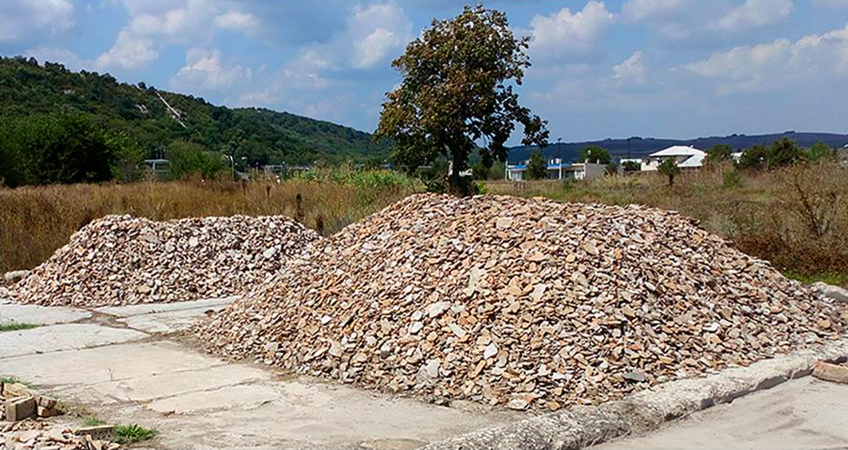
The moist salt obtained in the large production pits of the second half of the 5th millennium BC was further dried to become a transportable dry substance. The "baking" of salt occurred in massive domed kilns made of stone and clay. These had a roughly rectangular shape measuring around 5 x 3 meters, with internal heights exceeding 1 meter. The moist salt was packed and tamped into cylindrical or conical ceramic vessels of various volumes and arranged in the kilns. After intense heating, solid salt "ingots" of defined value were produced. These ingots were the final product of the production cycle and served as a key unit of trade exchange. The vessels used for baking had specific capacities, or "nominals," ranging from 20 grams to about 8 kg of ready-to-use dry salt. These salt ingots were transported to nearby and distant markets or exchanged on-site.

In the mid-5th millennium BC, the climate became drier, temperatures rose, and the saline springs near the settlement gradually began to dry up. The salt-production center was abandoned, and a new method of salt extraction emerged - by evaporating brine using solar heat. This was carried out in a large facility near the settlement mound, consisting of a complex of dug-out channels, a well for saline water, and an evaporation "basin." Salt production declined sharply, leading to violent internal conflicts over its distribution.

Chalcolithic ritual pits in the production center

In the worldview of early farmers and herders, the sacred and the profane were inseparably connected. The emergence of specialized production led to changes in ritual practices, which, within the context of the production center, were directed toward seeking symbolic protection and support for the production of cooking salt.

The dug-in ritual structures discovered in the salt-production complex do not interfere with the production installations, indicating that they are related either to periods of active use or to the ritual marking of the end of a facility’s operation.

Such structures are rare during the Neolithic and Early Chalcolithic, but during the Middle and Late Chalcolithic (4700 - 4350 BC), their number increases. This is a clear indication that, as salt production expanded and became more complex, specific ritual activities also developed. The intensification of ritual practices may also reflect fears surrounding the potential drying up of the salt springs - a fear that ultimately materialized due to a general climatic drying trend.

Ritual pit. Early Chalcolithic (4900 – 4700 BC)
Ritual pit. Late Chalcolithic 1, 4600 – 4450 BC
Ritual pit. Late Chalcolithic, Late Chalcolithic 1, 4600 – 4450 BC
Salt trade routes from Provadia–Solnitsata

Long-distance trade

The emergence of the prehistoric urban center of Solnitsata was driven by the industrial-scale production of salt. The trade of this vital resource - over which Solnitsata held a monopoly - was carried out across long distances in the unique form of commodity money. Before being consumed by humans and domestic animals as an essential condition for life, salt functioned as a medium of exchange in the trade of raw materials and prestige goods. Such items were imported from the Aegean coast, the Rhodope Mountains, Strandzha, and the Sredna Gora range to the south, as well as from the Razgrad region to the north. Salt was the engine behind this trade network, which included routes through the Eastern Balkan Mountains, along the Provadiya River, and along the Black Sea coast.

As a result of previously unknown socio-economic relationships in Europe, the earliest hierarchical and complex society emerged along the lower reaches of the Provadiya River - leaving behind the extraordinarily rich Varna “gold” necropolis on the shore of Lake Varna.

The tell at Provadia-Solnitsata

From the long-term habitation of people at this spot between 5600 and 4350 BC, a settlement mound took shape measuring about 105 m in diameter and roughly 9 m high. Its cultural layer contains strata with architectural remains from the first half of the Late Neolithic (≈1 m) and from the Middle and Late Chalcolithic (together ≈8 m!).

A direct result of the specialized production of cooking salt and the long-distance trade in this vital commodity was the accumulation of immense wealth - and the pressing need to guard it securely. This necessity led to the construction of a stone fortress around the settlement.
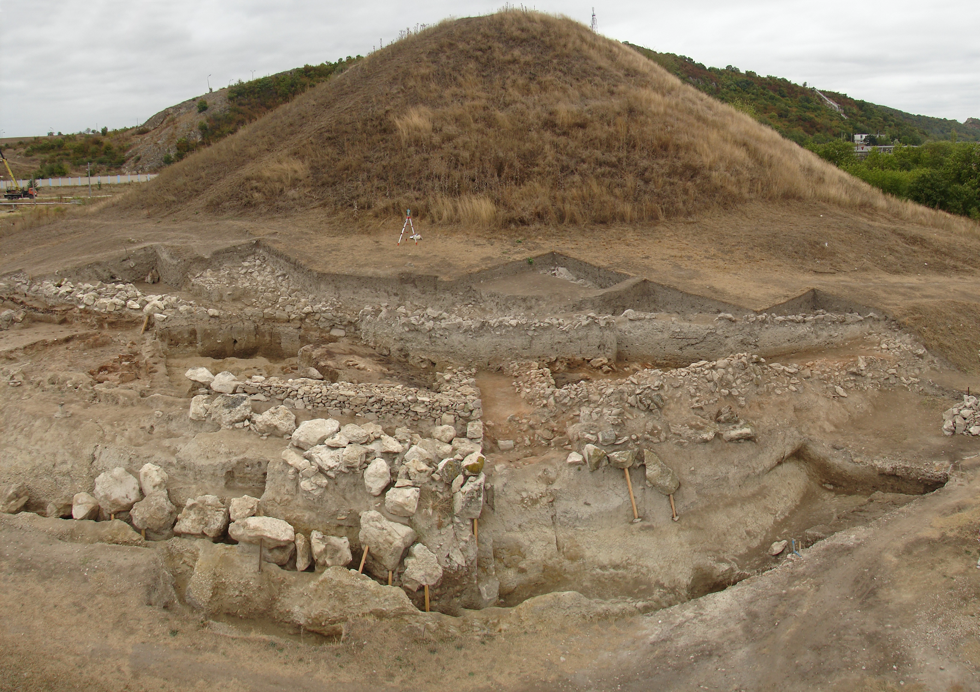
The Middle- and Late-Chalcolithic settlement of Provadia-Solnitsata was extraordinarily well fortified. Archaeological research has uncovered remains of three successive Chalcolithic defensive systems (4700 - 4350 BC) built of roughly hewn stone. The massive, tall stone walls that encircled the settlement on all sides offered first-rate protection for both the riches amassed through salt production and trade and the lives of their owners. So far, no comparable stone citadel of the 5th millennium BC is known elsewhere in Europe - an astonishing feat of military planning and construction skill.

More than a millennium after occupation ceased, the mound’s summit was reused as a burial ground during the Middle Bronze Age. Over two millennia later, in the 2nd–1st centuries BC, a Thracian royal residence rose atop this prehistoric “hill”; in time its ruins were covered by a large tumulus.

The settlement mound of Provadia-Solnitsata: view from the south with sections of the three stone defensive systems.
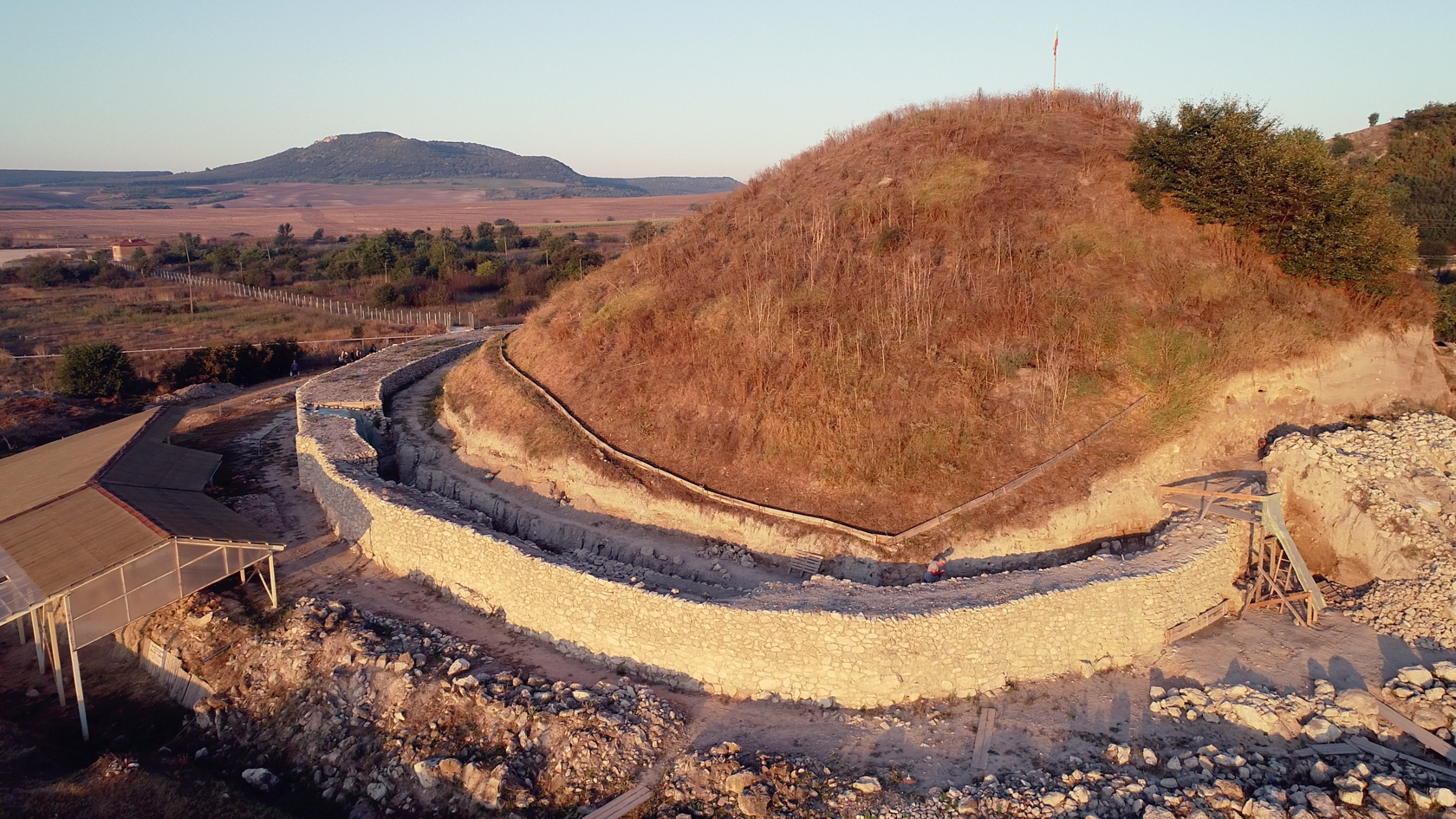
Settlement mound of Provadia-Solnitsata. Aerial view
Dwelling from the Middle Chalcolithic, destroyed in a fire disaster
Vessels on the floor of the second storey of a Middle Chalcolithic dwelling.
Grain storage bin
Floor of the second storey of a Late Chalcolithic house
Reconstructions of Late Chalcolithic two- and three-storey houses

Settlements during the Middle and Late Chalcolithic

During the Chalcolithic period, the inhabitants of the Salt Pit (Solnitsata) lived in large, above-ground houses, usually consisting of a single room, although some had two rooms or a main room with an antechamber. Both single-story and multi-story structures are known, with two- and three-story houses becoming dominant in the later phases of the settlement’s existence. The construction technique involved a massive wooden framework for the walls, wooden interior supports, and a timber-framed gable roof. The walls were made of vertical wooden posts driven into the ground, with wattle (woven twigs) in between. In some cases, planks were attached horizontally to the upright posts. The ground floor had a floor of compacted clay, while the second and third floors rested on a strong beam floor of closely arranged round and split logs, covered with a thick clay layer. The gable roof was thatched with bundles of cereal stalks. No information is available about the joinery used between the wooden load-bearing elements.

In the southern periphery of the settlement mound, several residential structures from the Middle Chalcolithic (4700 - 4600 BC) have been excavated, destroyed by fire. These houses were built adjacent to the second stone defensive wall, which had four entrances evenly distributed along its length - each pair of opposite gates was connected by a street about two meters wide. These two main streets intersected in the central zone of the settlement, dividing it into four “quarters.” The settlement covered around 0.5 hectares and was densely built up with one- and two-story houses, whose entrances opened onto the streets. These homes were likely occupied by one or two related families. The interior typically included a domed hearth used for heating and cooking, a hand-operated stone grain mill placed nearby, and large clay storage vessels for grain. A clay platform for food preparation, numerous ceramic vessels, and household tools were also part of the domestic inventory.
In the Late Chalcolithic, the settlement area decreased to about 0.4 hectares and passed through two distinct phases. During the first phase (4600 - 4450 BC), the settlement was surrounded by a massive stone fortress, likely with only two entrances - north and south - connected by a central street. Around 4450 BC, a powerful earthquake destroyed the settlement: houses burned in a fire, and the upper part of the defensive wall collapsed. The debris was cleared, the terrain was leveled, and a new settlement was built. A new stone fortification system was also constructed, with its wall roughly following the path of the previous one. It is unclear how many entrances this new fortress had, though at least one gate existed in the northwest. Due to the increased population, the houses were built tightly together in clusters, separated by narrow streets. In the southwestern periphery of the settlement, a deep well was dug to provide drinking water - especially critical during enemy sieges, which evidently occurred more than once.

In the second phase of the Late Chalcolithic (4450 - 4350 BC), the settlement consisted solely of two- and three-story houses with a floor area of 40 to 80 square meters, constructed of wood and clay. Each floor comprised a single room. The ground floor likely served a utilitarian purpose, such as storage - possibly of salt prepared for trade. The second floor was residential, containing the typical interior "furnishings": a domed hearth, a grinding installation for processing grain, and a clay platform for preparing food. These were accompanied by movable items such as ceramic vessels, tools, and utensils used in daily life. The third floor, in houses that had one, was used for storage and possibly as sleeping space for part of the household. The walls of some houses were richly painted in red and white. The emergence of three-story houses - reaching up to 9 meters in height - is a unique architectural phenomenon driven by the growing population. These structures may also have been markers of high social status.

Ritual structures within the settlement: Late Neolithic, Middle and Late Chalcolithic

Ritual practices held a central place in the lives of prehistoric communities. For ancient people, ritual was as essential as daily activities such as farming or building a home. In the world of these early societies, everything was interconnected - ritual, labor, and tradition were intertwined into a unified whole. Through rituals, the memory of ancestors was honored, fertility was requested for the fields and the household, established models of behavior were reaffirmed, and core values and beliefs were passed down.

The ritual pits discovered within the area of the settlement mound are among the clearest evidence of the active ritual life of its inhabitants. The rituals associated with these pits touch on key aspects of human existence - ancestors, the family, the house and everything in it, domestic animals, and more. The most impressive example is a ritual pit dug during the final phase of the Late Chalcolithic settlement. Several ceramic vessels were deposited in it, including an anthropomorphic vessel with a modeled human face and handles shaped like arms raised to the head. Also placed in the pit was a rare type of zoomorphic vessel representing a reclining bull with a massive body richly decorated with red bands bordered by white-inlaid lines. Given the richness of the ritual offerings, it is likely that this structure represents a rite dedicated to the ancestors, performed in connection with the abandonment of the settlement due to the severe climate drying at the end of the Chalcolithic.

Ritual structure, Late Neolithic 1 (5600 – 5200 BC)
Ritual pit. Middle Chalcolithic (4700 – 4600 BC)
Ritual pit. Late Chalcolithic 2 (4450 – 4350 BC)
Stone defensive walls 1 and 1a. Middle Chalcolithic. Southeastern gate
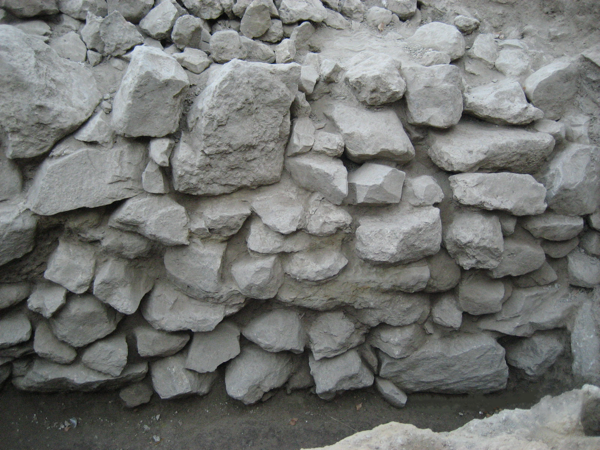
Stone defensive wall 2 Late Chalcolithic (4600 - 4450 BC)
Graphic reconstruction of stone defensive wall 2
Stone defensive system. 3. Late Chalcolithic (4450 - 4350 BC)
Graphic reconstruction of stone defensive wall 3

Stone defensive systems

The three successive Chalcolithic stone fortification systems surrounding the settlement of the ancient salt producers were built to protect both the population and the wealth accumulated through the production and trade of cooking salt - essentially safeguarding what can be considered the first “mint” in Europe. So far, no similar stone citadel from the 5th millennium BC has been identified elsewhere in Europe, making this not only a unique site but also an extraordinary achievement in military theory and construction engineering. The building and rebuilding of this stronghold was an extremely labor-intensive process, requiring the involvement of many people, including those from neighboring settlements, as well as highly specialized builders - something only possible in exchange for sufficient “currency” (i.e., salt). Thus, during the 5th millennium BC, hired labor emerged for the first time. The Salt Fortress could be constructed, maintained, rebuilt, and expanded only as a centralized military site and a symbol of the power of the Middle and Late Chalcolithic community in the Provadiya River basin.

The wall of the earliest enclosed stone citadel in Europe is approximately 2.20 meters wide, originally stood at least 4 meters high, and stretched for about 250 meters. It was built around 4700 BC from large, roughly hewn stones. The fortress had four entrances, one of which was flanked by protruding bastions. The two preserved gates on the southern side are 2.40 m and 1.80 m wide, with about 60 m between them. Destroyed by a powerful earthquake around 4650 BC, the wall was immediately replaced by a new one built directly beside the ruined structure, this time 1.40 m thick. Stones from the original wall were reused. The new wall retained the same entry points, though the large gate with bastions was narrowed to 1.30 m. Later, the new structure was also brought down by another earthquake around 4600 BC, crushing adjacent houses as it collapsed. Both fortifications were made of unworked stones bonded with clay, enclosing a settlement area of around 0.5 hectares, and served their defensive function for a total of about 100 years.

The second stone fortress was constructed at the beginning of the Late Chalcolithic, around 4600 BC. It has an irregular rounded shape, with maximum external dimensions of 71 x 75 meters, enclosing an area of about 0.4 hectares. The western part of the wall follows an almost straight line, while to the northwest, north, and northeast it forms a broad irregular arc. To the east and southeast it curves more regularly, and to the south and southwest, it includes two straight segments. Like the previous two, this was a closed-type fortification. Its rounded shape is actually a polygon formed by many short and long straight segments, in accordance with fortress construction principles. The face of the wall includes bends and small angular or curved bastions. Its recorded length is approximately 234 meters. The thickness varies between 2.40 and 4.30 meters. The maximum preserved height is 3.52 meters, though given its thickness, it was likely nearly twice as tall.
This second fortress was built using dry masonry: medium-sized stones were used on the outer faces, and smaller ones filled the interior. Only the face stones were bonded with yellowish-gray clay, which was also used to plaster the outer surface. A wide layer of small stones was laid at the base to stabilize the terrain against erosion. One gate has been identified, located in the northeastern section and oriented toward the salt production center. It is preserved to a width of 1.80 meters but was likely slightly wider originally. A street begins behind the gate, possibly leading to an opposite entrance. In this area, remains of a vertical wooden structure adjacent to the interior wall have been found. The wall foundation follows the mound’s slope, with minor internal terracing in some places. The fortress existed for about 150 years and was destroyed by a severe earthquake during the Late Chalcolithic, when the settlement also burned down.

The third stone defensive system was built around 4450 BC and consists of three components. The first is a stone revetment (“shell”) covering the steep slopes of the mound, which at the time had the shape of a truncated cone about 7 m high and 100 m in base diameter. The second component is a tall stone wall constructed around the top perimeter of the mound at the upper edge of the revetment. It is about 1.40 m wide and was likely 3.5–4 m tall. The third component includes around 50 closely spaced radial stone structures built on the revetment, connecting the defensive wall with the mound’s base. These structures range from 10 to 18 meters in length, 1 to 1.5 m wide at the bottom, and 2.5–3 m in height. They were constructed either as walls or solid conical-section bodies. This complex defensive system has no parallel in prehistoric Europe and represents a remarkable innovation in the continent’s military architecture.
The stone revetment was made of densely packed rough stones and served a dual purpose: to stabilize the mound’s erodible surface and hinder the approach of attackers. The radial structures were typically built with larger stones at the base and smaller ones above. They are placed close to each other - about 1.2 to 1.5 m apart, occasionally more—and played a crucial defensive role during attacks (which evidently occurred frequently, as hundreds of bone and flint arrow and spearheads, as well as human remains, have been found between them). Due to the narrow "corridors" between the radial walls, no more than two attackers could pass at a time, making organized assaults impossible. The defensive wall was constructed with both small and very large stones. Today, all the large stones lie scattered across the top surface of the revetment, possibly evidence of intentional destruction of the fortress.

Chalcolithic necropolises

Two necropolises belonging to the Chalcolithic urban and salt-production center have been discovered and partially excavated so far. The first is located about 400 meters southeast of the fortified settlement, on the opposite bank of the Provadiya River (2). It is now partially destroyed. A burial of a woman was excavated, placed in a contracted prone position, accompanied by a set of ceramic vessels. Bones from about a dozen other individuals were also discovered, originating from disturbed or destroyed graves. This necropolis dates to the Middle Chalcolithic (4700 - 4600 BC).
The second necropolis is located approximately 150 meters southwest of the settlement and covers an area of about 0.9 hectares (3). To date, 51 burials of adults and children have been excavated. The graves appear to be organized into irregular family plots and are characterized by a variety of burial rites. They were uncovered at depths ranging from 1.70 to 4 meters below the modern surface. The necropolis dates to the final phase of the Late Chalcolithic complex (4450 - 4350 BC) and reflects the emergence of internal conflict within the settlement.

The Late Chalcolithic necropolis (4450 - 4350 BC) includes primary graves with articulated skeletons, secondary partial burials, and symbolic graves. Primary graves are usually single burials, though in rare cases two or more individuals were buried together. Nearly all age groups are represented. The grave goods indicate that individuals from two major neighboring ethno-cultural communities were buried here. The skeletal remains of several individuals show clear signs of violent death, including those of six adults and children buried in a mass grave.
The second group of graves contains reburied skeletal remains (secondary graves), most of which are accompanied by grave goods. Within the excavated area of the necropolis, copper tools, prestige items made from mollusk shells, and ceramic vessels have been deposited. These are interpreted as symbolic graves or as remnants of commemorative rituals.

Location of the Chalcolithic necropolises
Grave of a woman placed in a contracted prone position, with a set of ceramic vessels. Middle Chalcolithic
Late Chalcolithic
Finds from commemorative rituals
Middle Bronze Age
Grave of a Scythian warrior with a bone scepter, 6th century BC
Fragments of luxury vessels (2nd–1st century BC)
General plan of the excavated area of the aristocratic complex
Aristocratic complex (2nd–1st century BC)

Later structures on top of the settlement mound

Structures and materials discovered on top of the settlement mound indicate that it was inhabited after the end of the Chalcolithic period - during the Middle Bronze Age, the Late Iron Age, the Roman period, and Late Antiquity.

The upper surface of the mound was used as a burial ground during the Middle Bronze Age. So far, three closely positioned graves from this period have been identified, one of which was covered by a small stone mound. The burials were inhumations, with the deceased placed in a contracted position. Two ceramic vessels were found in one of the graves.

In the southwestern and northwestern sectors, part of an aristocratic complex has been uncovered. It was built on the leveled surface of the mound and was later covered by a tumulus. The complex was in use from the 2nd to the mid-1st century BC and was probably destroyed during one of the military campaigns of the Dacian-Getic ruler Burebista. Both buildings of the complex were significantly disturbed by a large linear trench, likely dug during Late Antiquity.

The Thracian aristocrat who lived there with his family clearly possessed considerable wealth, most likely acquired through the production and trade of cooking salt. Several years ago, about 200 fragments of luxury Greek cups with decorative motifs were discovered south of the second building - vessels previously known only from the Greek colonies along the Black Sea coast. The complex was also served by a ritual center, where the now-famous eschara with female figures in adoration was found three years ago.