3D Models and Virtual Reality Revive Europe’s Oldest Urban Center
What would it be like if we could step into a time machine and travel back to distant prehistory, experiencing with all our senses life as it once was? What would it be like if, before our very eyes, people, cities, and ways of life could come alive again?
In today’s world, where artificial intelligence and virtual reality have become inseparable parts of daily life, the hubs of ancient history – museums – are no longer what they once were.
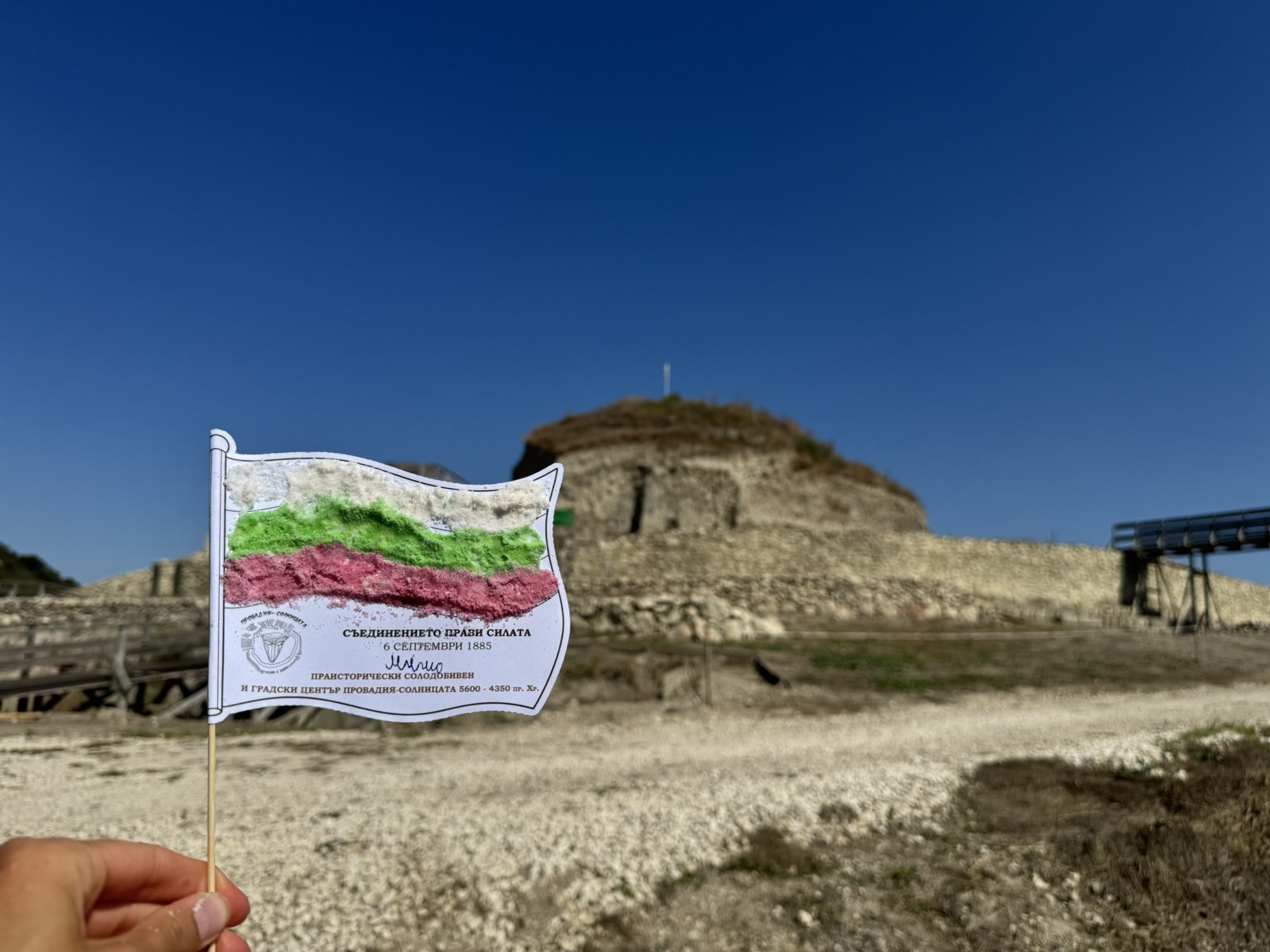
The Historical Museum in Provadia proves this with a large-scale project dedicated to the cultural and historical heritage of the Provadia–Solnitsata archaeological complex. The museum presents one of the largest prehistoric sites in Bulgaria, considered the oldest salt production center in Europe.
The project, titled “The Salt of Provadia: Innovative Approaches to the History of the Oldest Specialized Salt Production,” has the ambitious goal of literally bringing to life the history of Europe’s earliest urban center, which thrived from around 4700 BC to 4350 BC before perishing due to drastic climate changes.
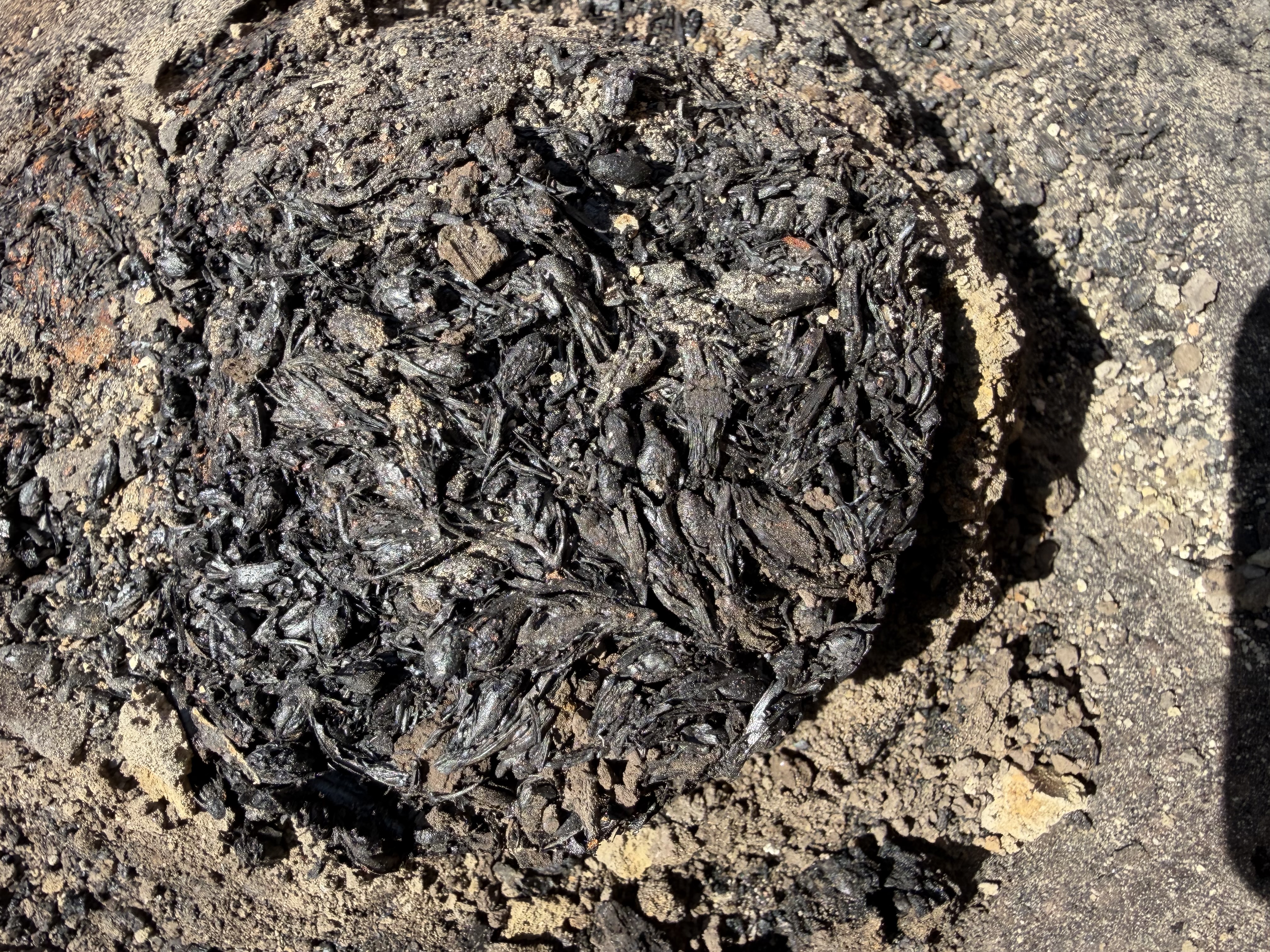
In the heart of present-day Northeastern Bulgaria lies the largest salt deposit in the Balkans – the Mirov salt deposit, a massive body of salt shaped like a truncated cone, reaching a depth of 4 kilometers. Around 7,600 years ago, people settled here and began extracting and producing salt from brine springs. By around 5600 BC, Solnitsata emerged – the earliest known salt production center in Europe. The table salt produced here was not only essential for survival but also served as a means of payment, turning the settlement into a hub where humanity took its first steps toward urban life.
Today, Solnitsata near Provadia is one of the most fascinating prehistoric sites in Europe, thanks to the discoveries made during archaeological excavations led by Academician Vasil Nikolov since 2005, joined by scholars from Germany, France, Japan, the USA, and beyond.
This inspired the Provadia Museum and Acad. Nikolov’s team to take the next step – to revive the prehistoric settlement with modern 3D models, virtual reality, and multimedia installations, making the encounter with the artifacts even more exciting for visitors of all ages.
In unison with the famous salt cone, a movable dome will be installed next to the settlement mound, operating from March to the end of October. There, visitors will be able to immerse themselves in the past, watching realistic visualizations of the various stages of salt production – a resource that, in antiquity, was more valuable than gold.
An interactive 3D model of Solnitsata is also planned – a digital reconstruction of the archaeological complex. It will feature precious artifacts discovered in recent years, digitized as scanned 3D models and presented in a lifelike environment. This will allow visitors to virtually step onto the very ground where, over the years, modern explorers have uncovered traces of ancient history.
Photos: Archaeological team of Provadia–Solnitsata